Gain expertise in EV systems, power electronics, motor control, and vehicle simulation through our industry-leading internship program.
An actionable, industry-aligned roadmap engineered for career transformation.
Compressed learning cycle for maximum retention and skill acquisition.
Go beyond theory with live coding sessions and real-world datasets.
Build a professional portfolio that stands out to top-tier recruiters.
Industry-recognized credentials to validate your Core expertise.
Forces & Power Calculation on EV Calculations
Intro to Autonomous Vehicle
Power Electronics for Automotive Industry
Introduction to eMotors for EV Application
Simscape Introduction
Simscape Fundamentals
Vehicle Modeling Intro
Timeline
Phase 28A: EV & Autonomous Vehicle Foundations — EV power calculations, autonomous vehicle basics, power electronics, eMotors, Simscape fundamentals, and vehicle modeling introduction.
Rectifier Design
Power Factor Correction Design
Power Inverter Design for EV Application
Timeline
Phase 28B: EV Power Electronics — rectifier design, power factor correction, and inverter design tailored for electric vehicle applications.
DC Motor Speed Control - Simulink
BLDC Motor Control - Simulink
FOC Control of 3 Ph Induction Motor - Simulink
PMSM Motor Control MATLAB Simulink
SRM Motor Control MATLAB Simulink
Timeline
Phase 28C: Motor Control with MATLAB Simulink — DC motor speed control, BLDC motor control
Introduction to Battery Modeling MATLAB Simulink Battery Management System SOC Estimation, Protection Battery Thermal Management System Vehicle Drive and Control Power Train Modeling Timeline Phase 28D: Battery Systems & Vehicle Modeling — battery modeling, BMS, SOC estimation, thermal management, vehicle drive/control, and power train modeling.
Battery Systems & Vehicle Dynamics
Master the industry-standard tools required for modern EV engineering and control systems.
Real challenges. Real solutions. Your portfolio will feature these production-grade applications.
Advanced motor control technique that provides smooth and efficient torque control in EVs.
Learn More arrow_forwardSimulation of the complete EV energy flow system from battery to wheels.
Learn More arrow_forwardMethod to monitor battery charge level and ensure safe operation and longer battery life.
Learn More arrow_forwardSystem that manages vehicle movement, including speed, torque, and braking control.
Learn More arrow_forwardTransforming learners into industry-ready AI professionals.
| Skill Category | Before Pantech | After Internship |
|---|---|---|
| Skill Category | Before Pantech | After Internship |
| EV Systems | Theoretical knowledge of battery packs |
check
Ability to design and simulate complete EV powertrain systems
|
| Motor Control | Basic understanding of electric motors |
check
Proficiency in advanced FOC and PWM motor control algorithms
|
| Battery Management | Limited exposure to cell balancing |
check
Design of active and passive BMS balancing circuits
|
| Embedded Integration | Writing basic microcontroller code |
check
Full integration of firmware with vehicle sensors
|
| Hardware Prototyping | Schematic reading difficulties |
check
Hands-on PCB layout and hardware testing proficiency
|
A systematic 5-phase journey to transition from student to EV engineer.
Master forces, power calculations, and EV system basics.
1Design rectifiers, inverters, and power factor correction circuits.
2Simulate and control BLDC, PMSM, and Induction motors.
3Develop BMS, integrate sensors, and fabricate EV models.
4Bridge the gap between theoretical knowledge and industrial application through guided practice.
Apply deep learning models to real-world datasets and applications.
Earn certification and receive guidance for careers in AI and EV technology.
Complete hands-on exercises involving complex EV subsystems and control loops.
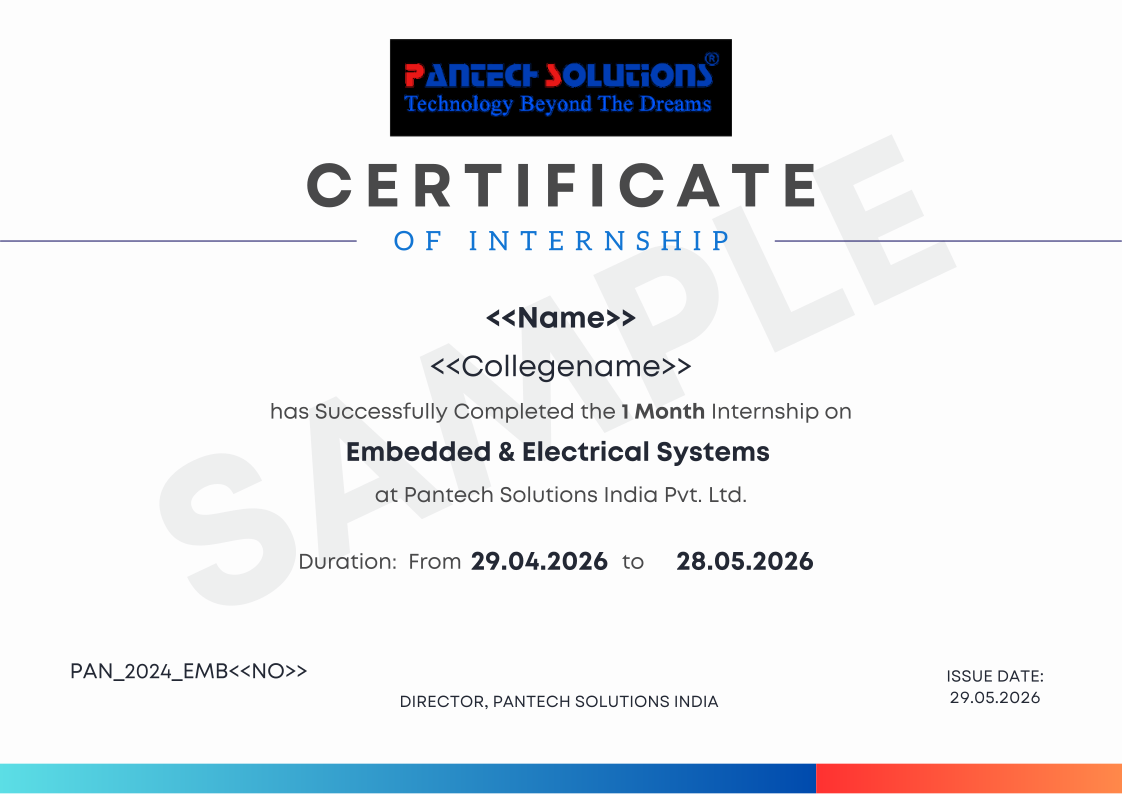
Validate your skills with a certificate that carries weight. Our credentials are recognized by leading tech firms across the country.
Unique QR code for instant digital verification
LinkedIn-ready digital credential
Increases visibility in recruiter searches
Official seal from Pantech Solutions
Status
Verified Intern
The certificate acknowledges the learner’s participation in structured training, industry‑oriented project development, and practical implementation under professional guidance.
This is to certify that the learner has successfully completed the Certification Program with Pantech. This professional certification formally recognizes the learner’s achievement, confirming their participation in structured training, guided project work, and practical implementation during the program.
A prestigious joint certification from SVNIT and Pantech. Note: Need to pay extra Rs.500 for service charges.
Select the program that matches your career goals and current expertise level.
1 Month - Rs. 999 + GST
Perfect for beginners. Master the core fundamentals and build your first industry-standard projects.
2 Month - Rs. 1899 + GST
For those with basic knowledge. Deep dive into advanced architectures and professional workflows.
3 Month - Rs. 2499 + GST
Designed for final year students and professionals. Focus on deployment, scaling, and leadership.
Our alumni are driving innovation at the world's most prestigious technology and consulting firms.
"The EV Vehicle Design Workshop was highly informative and engaging. The sessions provided a clear understanding of the fundamentals of electric vehicle design. Overall, it was a very valuable learning experience that enhanced my knowledge of EV design and its future potential. I look forward to attending more such workshops in the future."
EV Workshop Participant
"This course was extremely useful for my studies and future project work. The sessions were engaging and the trainer explained the concepts very clearly, making the class both interesting and practical. The hands-on approach gave me valuable experience that will benefit my upcoming semester projects. Overall, it was a highly beneficial learning experience."
Electronics Course Participant
"I recently attended the Electric Vehicle Design online class and found it to be quite informative and well-structured. The instructor explained complex concepts like battery management systems, motor control, and regenerative braking in a clear and accessible way. I appreciated the use of real-world examples and case studies."
EV Design Class Participant
Everything you need to know about the AI Internship program.
We offer flexible durations of 15 Days, 1 Month, 2 Months, and 3 Months.
Yes, we offer both Offline and Online modes of training.