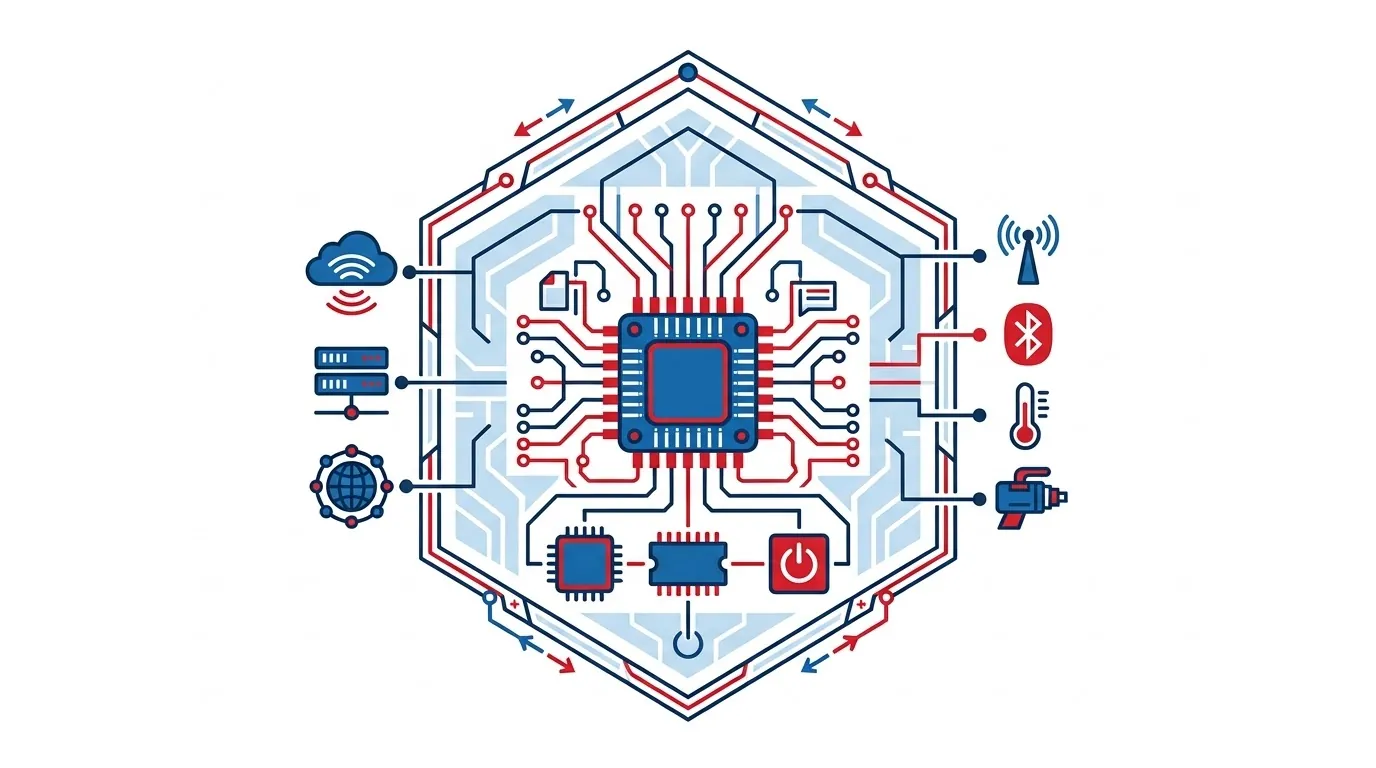
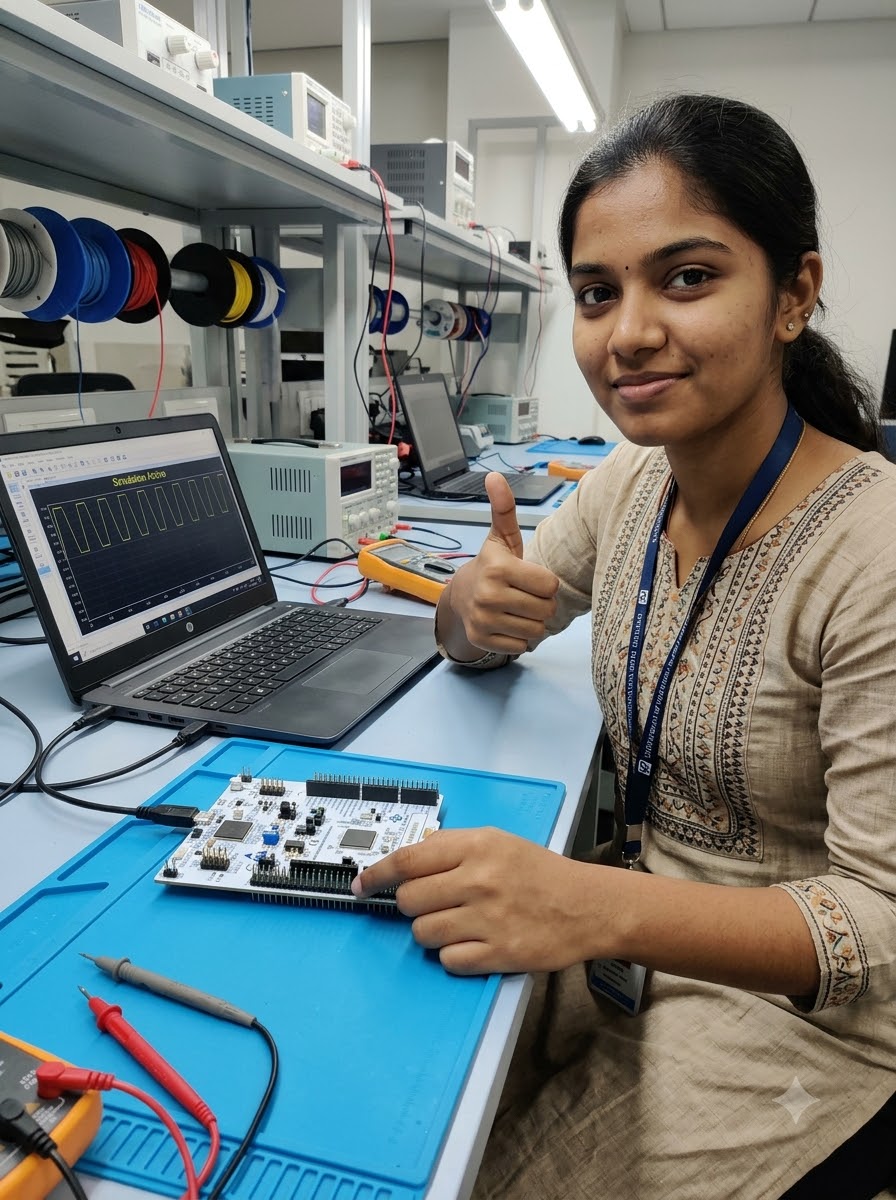
Master embedded C programming, microcontroller architecture, RTOS, embedded Linux, firmware engineering, hardware drivers, and industrial communication. Build production-ready embedded systems using ARM Cortex-M, STM32, FreeRTOS, Linux, CAN, Modbus, and modern firmware development workflows.
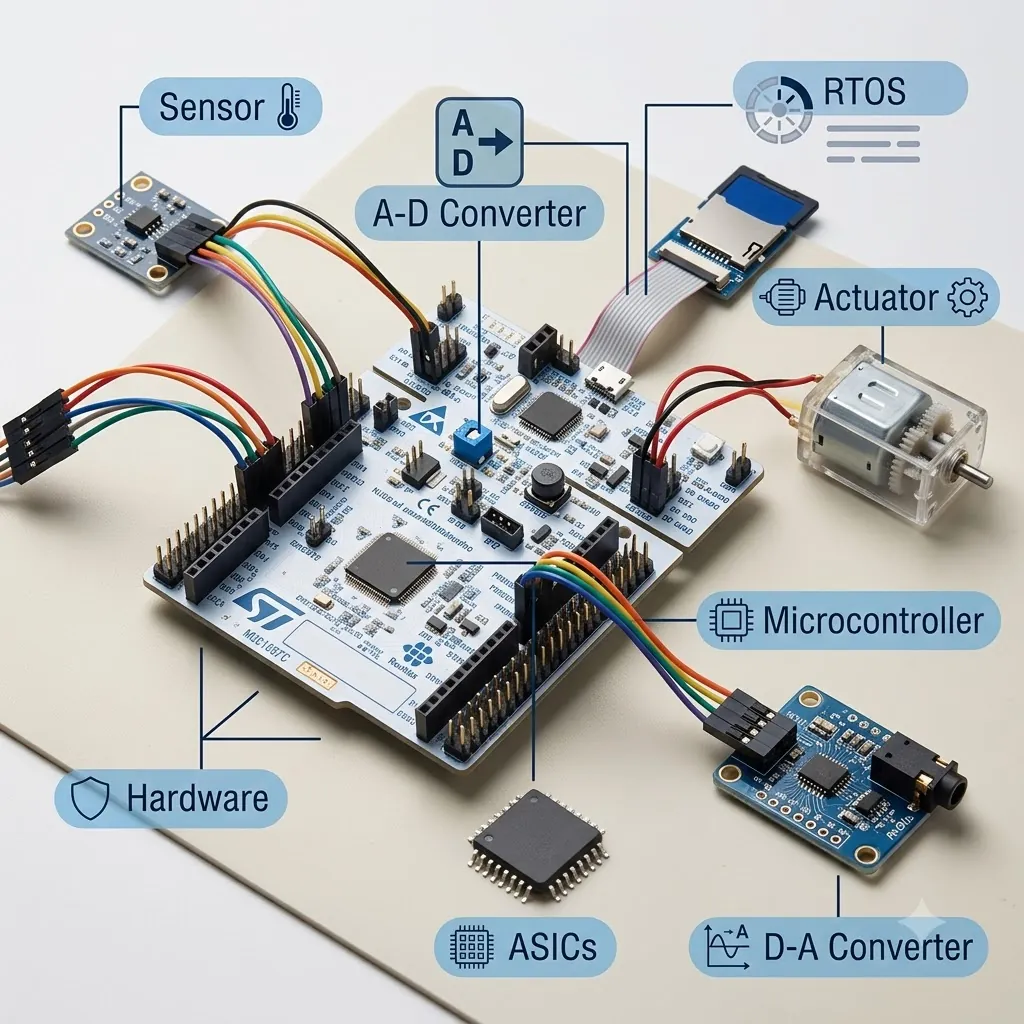
Industry-Standard Embedded Systems Engineering Toolchain
Build production-ready embedded engineering expertise across Embedded C, real-time systems, hardware drivers, Embedded Linux, and industrial firmware development.
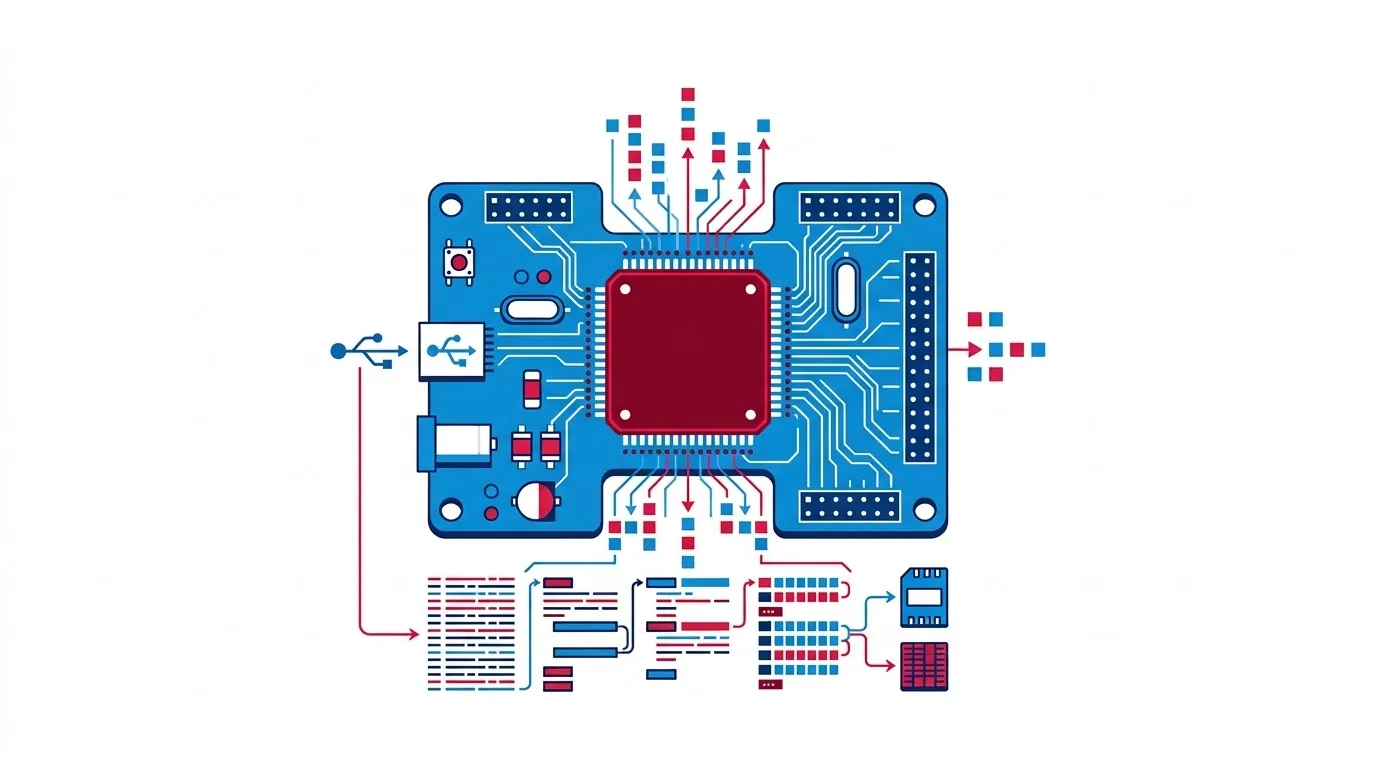
Build reliable microcontroller firmware using Embedded C, low-level programming techniques, memory management, interrupts, and peripheral programming.
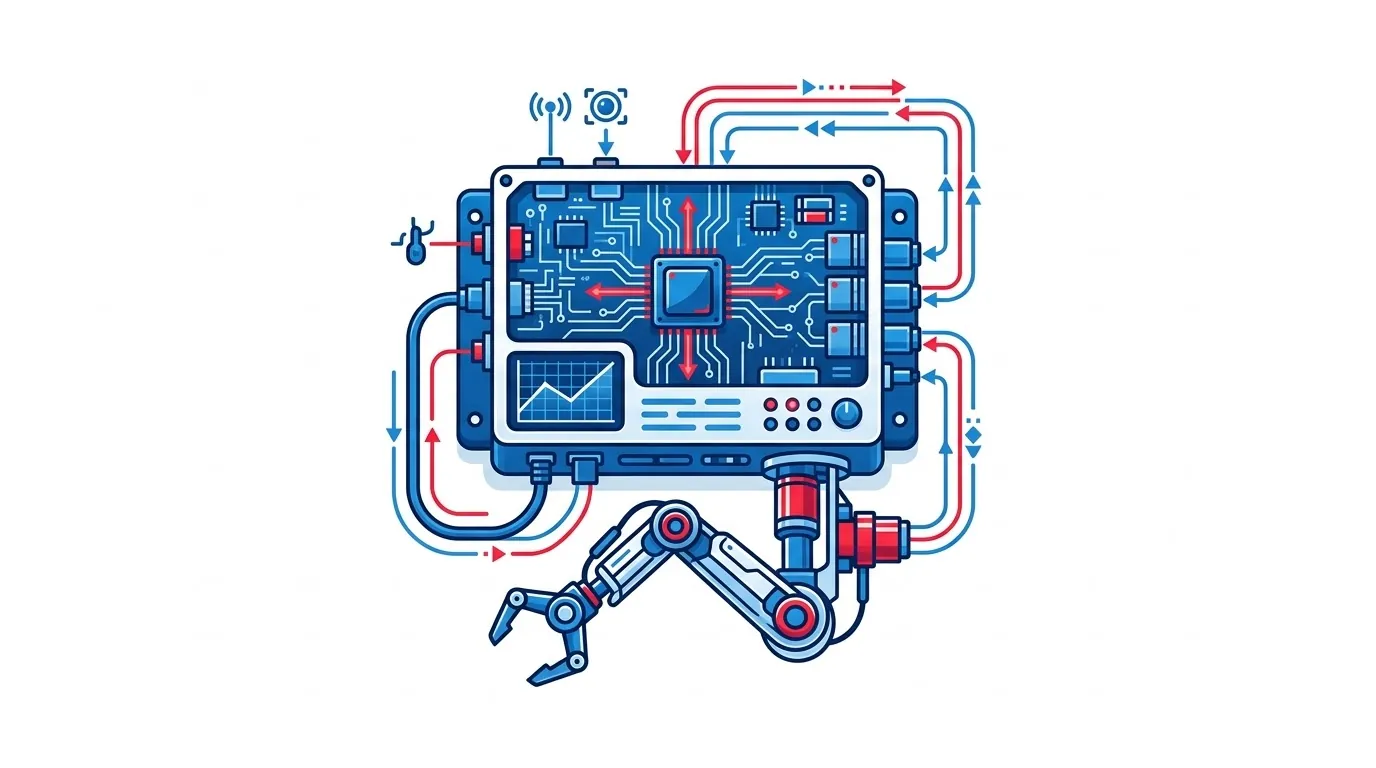
Design real-time embedded applications using ARM Cortex-M, STM32, FreeRTOS, task scheduling, synchronization, and hardware integration.
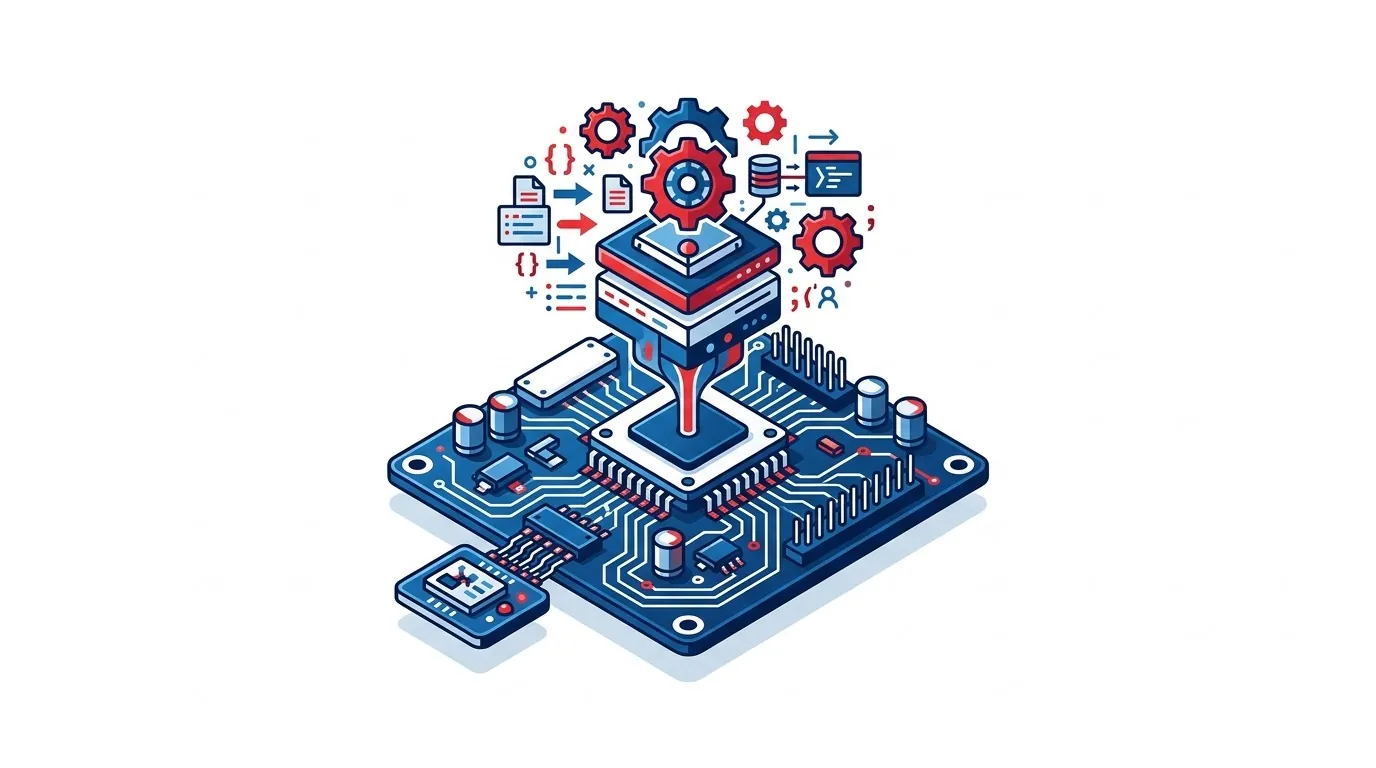
Develop embedded Linux platforms, device drivers, boot systems, and custom operating-system stacks using Buildroot, U-Boot, and device tree configuration.
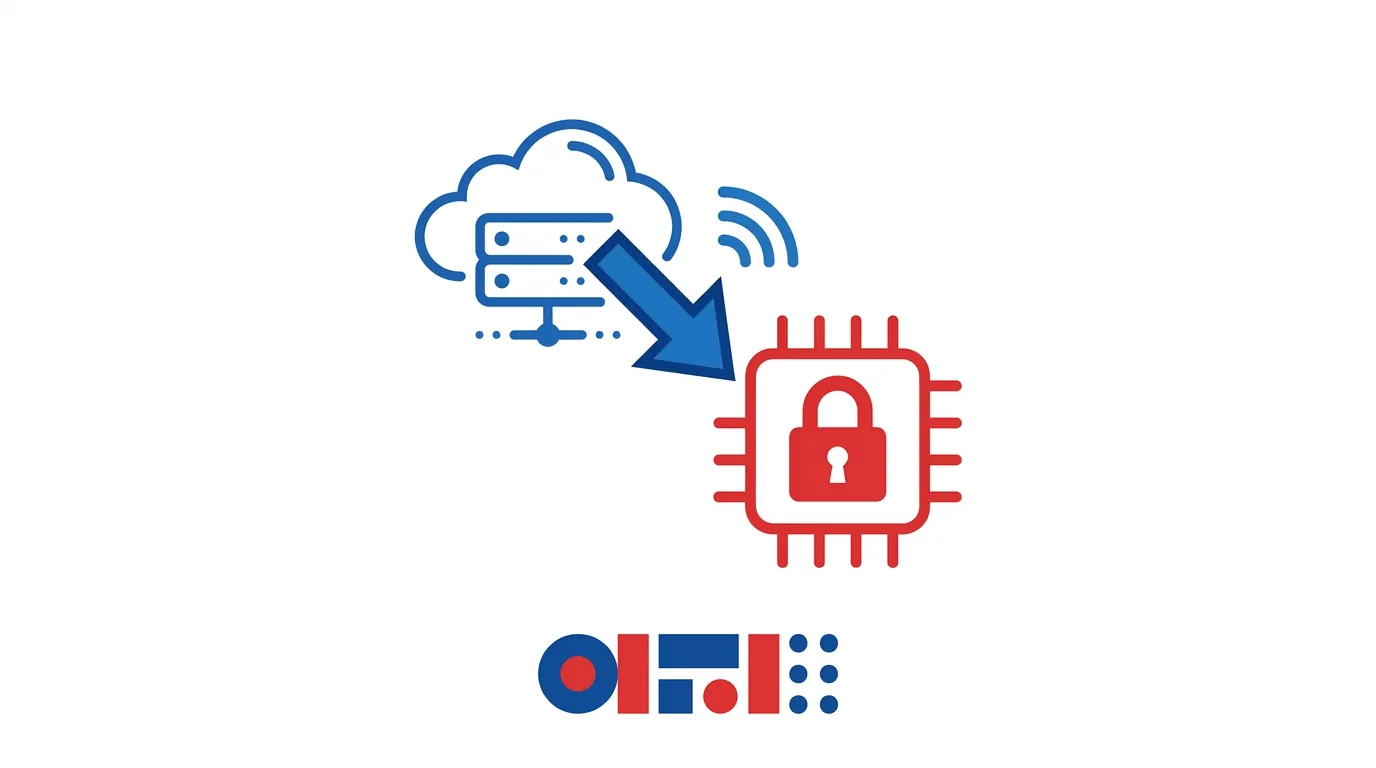
Develop production-ready firmware with industrial communication, device drivers, bootloaders, OTA updates, debugging, and secure deployment workflows.
A complete industry-focused curriculum covering Embedded C, ARM Cortex-M, STM32, RTOS, hardware drivers, Embedded Linux, industrial communication, firmware development, debugging, security, and production deployment.
Build a complete STM32-based firmware application using Embedded C, GPIO, interrupts, timers, UART, SPI, and I2C, with a structured peripheral-driver architecture.
Build a FreeRTOS-based real-time controller integrating sensor inputs, task scheduling, queues, semaphores, motor drivers, watchdog protection, and real-time performance monitoring.
Build and integrate an Embedded Linux device driver for a sensor, configure the device tree, compile the Linux image, and validate the driver on target hardware.
Build a production-ready embedded system integrating an ARM microcontroller, RTOS-based task scheduling, hardware drivers, Embedded Linux, industrial CAN/Modbus communication, firmware debugging, OTA updates, and secure firmware deployment.
Professional programming languages, embedded development environments, operating systems, debugging tools, hardware platforms, and deployment technologies used in modern Embedded Systems Engineering.
Progress from Embedded C and microcontroller fundamentals to RTOS, Embedded Linux, production firmware, industrial communication, debugging, security, and real-world embedded system deployment.
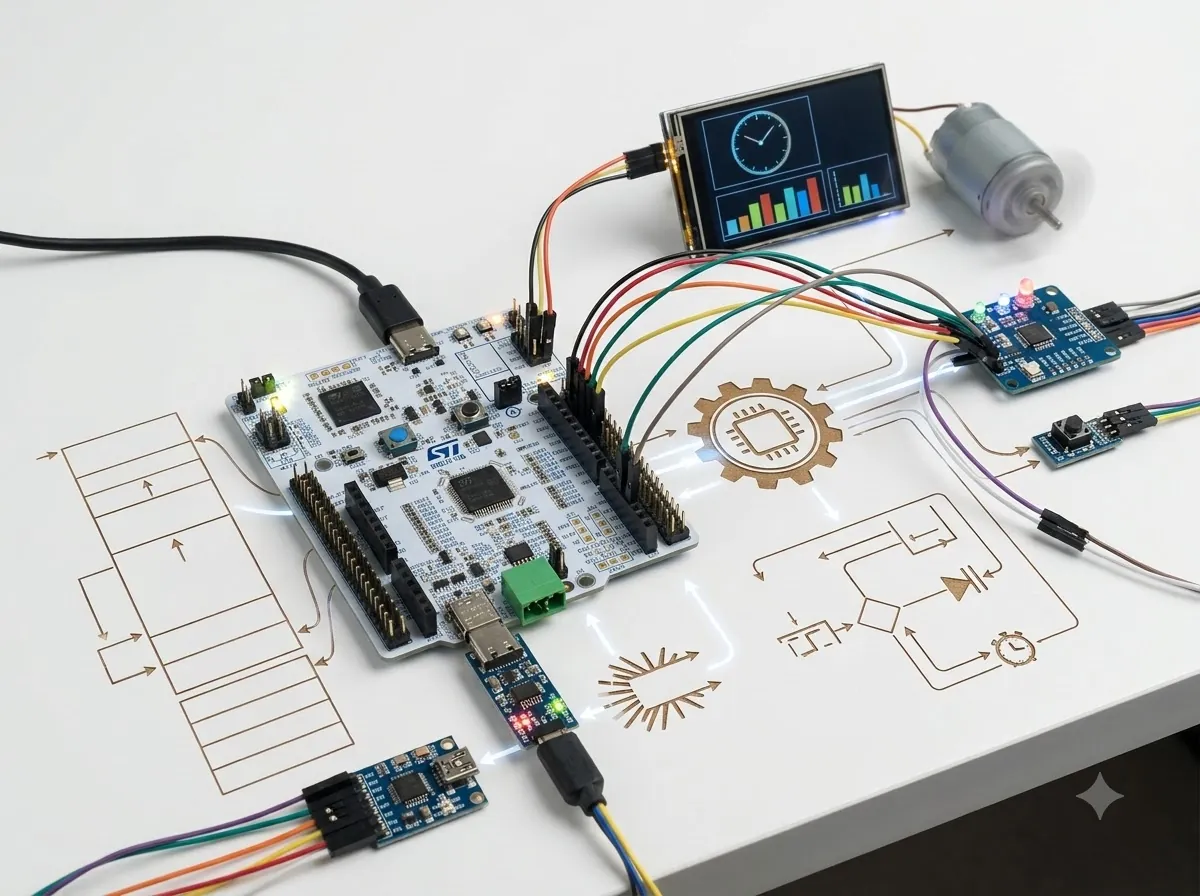
Embedded C & Microcontrollers →
Build a strong foundation in Embedded C, pointers, memory management, ARM Cortex-M architecture, STM32 programming, interrupts, GPIO, timers, PWM, UART, SPI, I2C, and peripheral drivers.
Deliverable:STM32 Microcontroller Firmware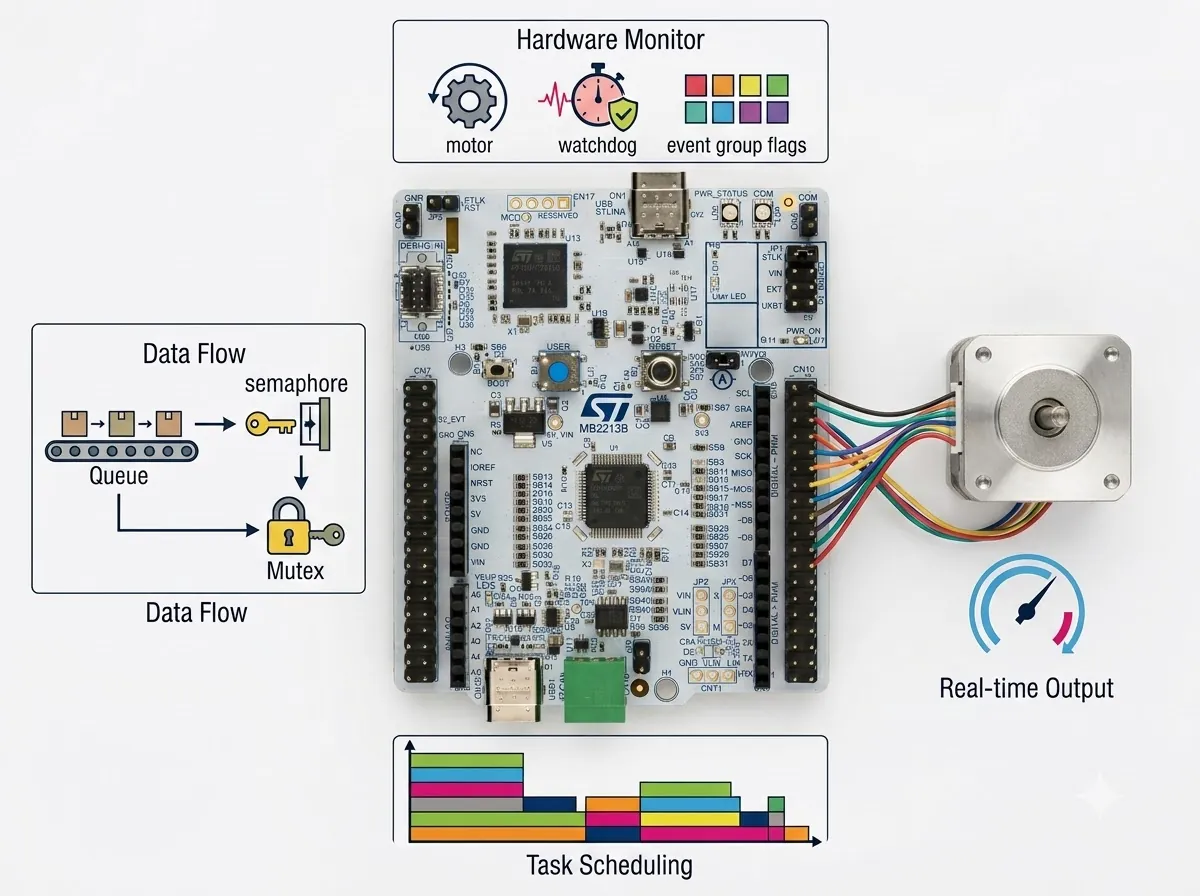
RTOS & Hardware Engineering →
Build a strong foundation in Embedded C, pointers, memory management, Develop real-time applications using FreeRTOS covering task scheduling, priorities, queues, semaphores, mutexes, event groups, hardware integration, watchdogs, and real-time motor control.
Deliverable: RTOS-Based Robot Controller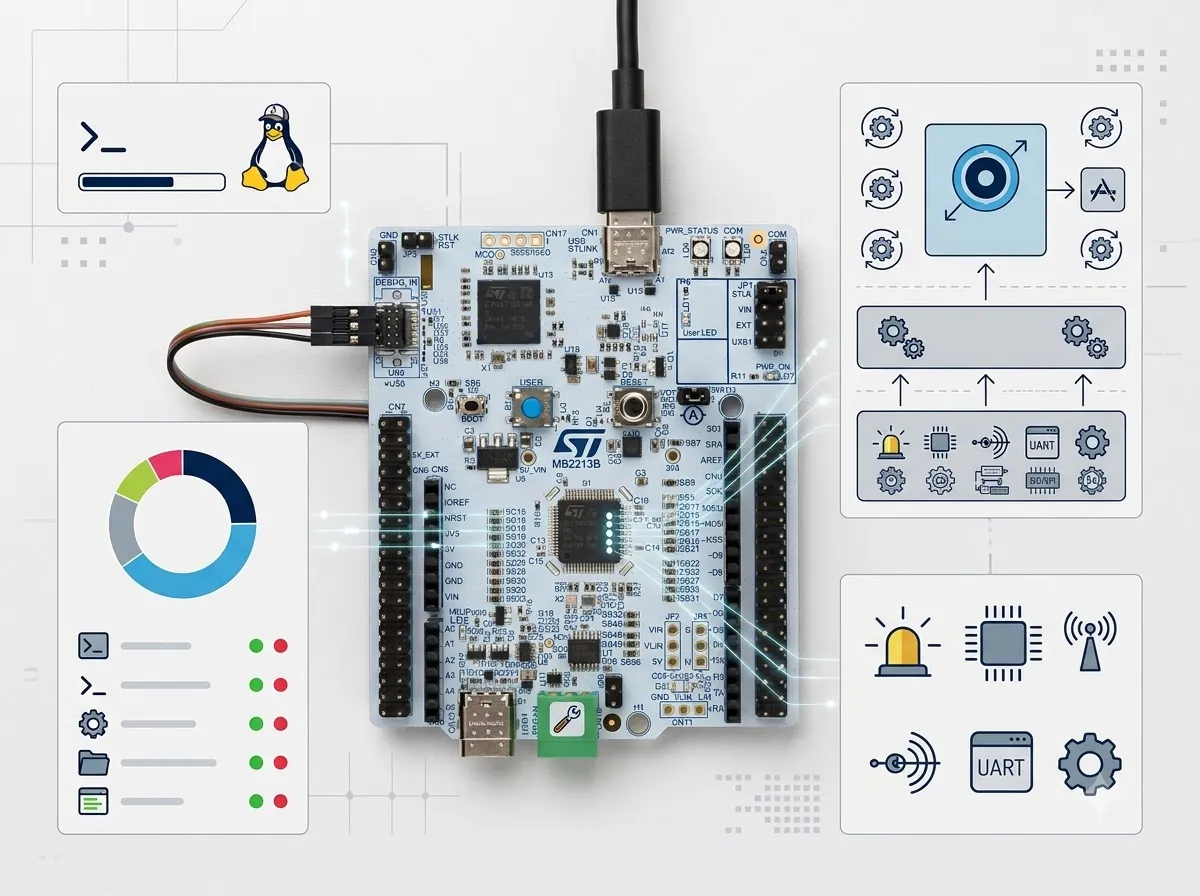
Embedded Linux & Drivers →
Learn Linux kernel fundamentals, processes, memory, device drivers, kernel modules, Buildroot, U-Boot, device tree, cross-compilation, and complete embedded Linux board bring-up.
Deliverable: Embedded Linux Sensor Driver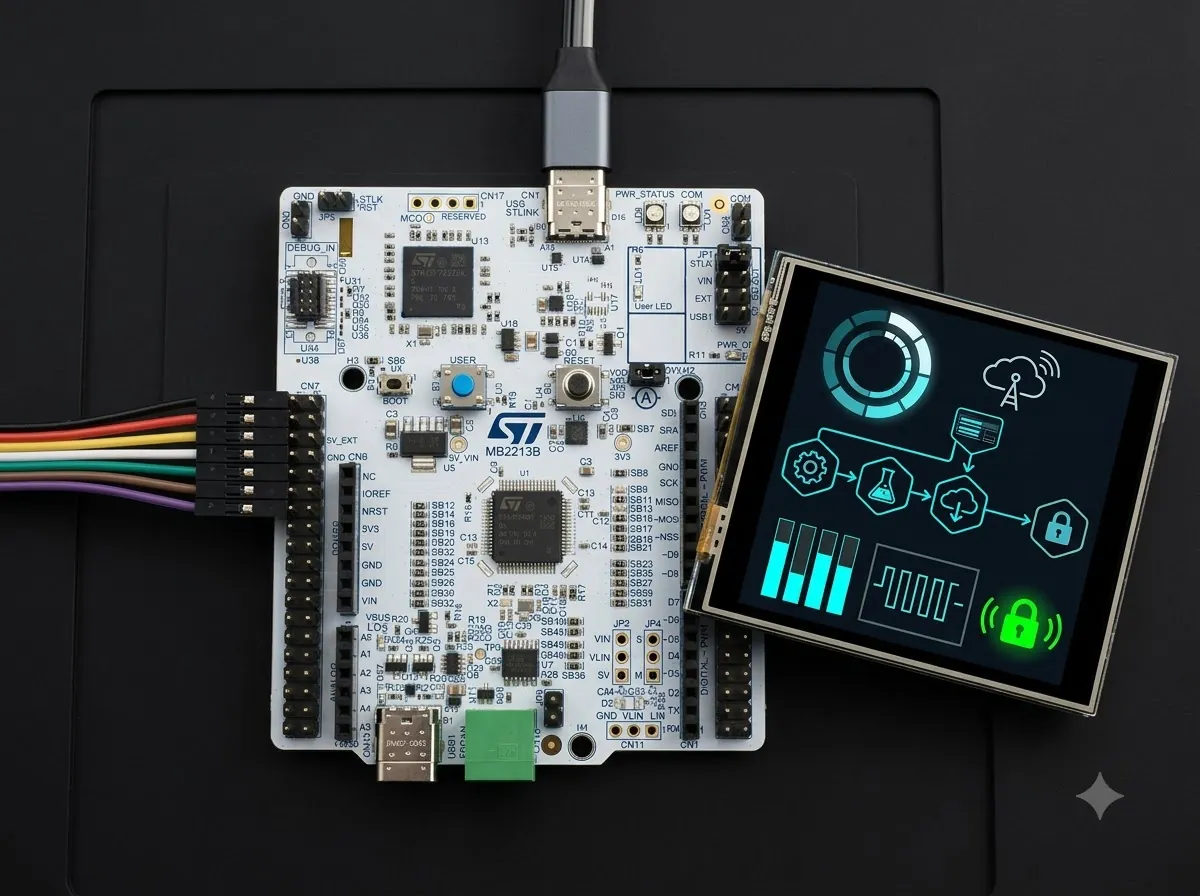
Production Firmware & Deployment →
Build production-ready expertise across microcontrollers, RTOS, Embedded Linux, firmware development, hardware drivers, industrial communication, debugging, security, and deployment.
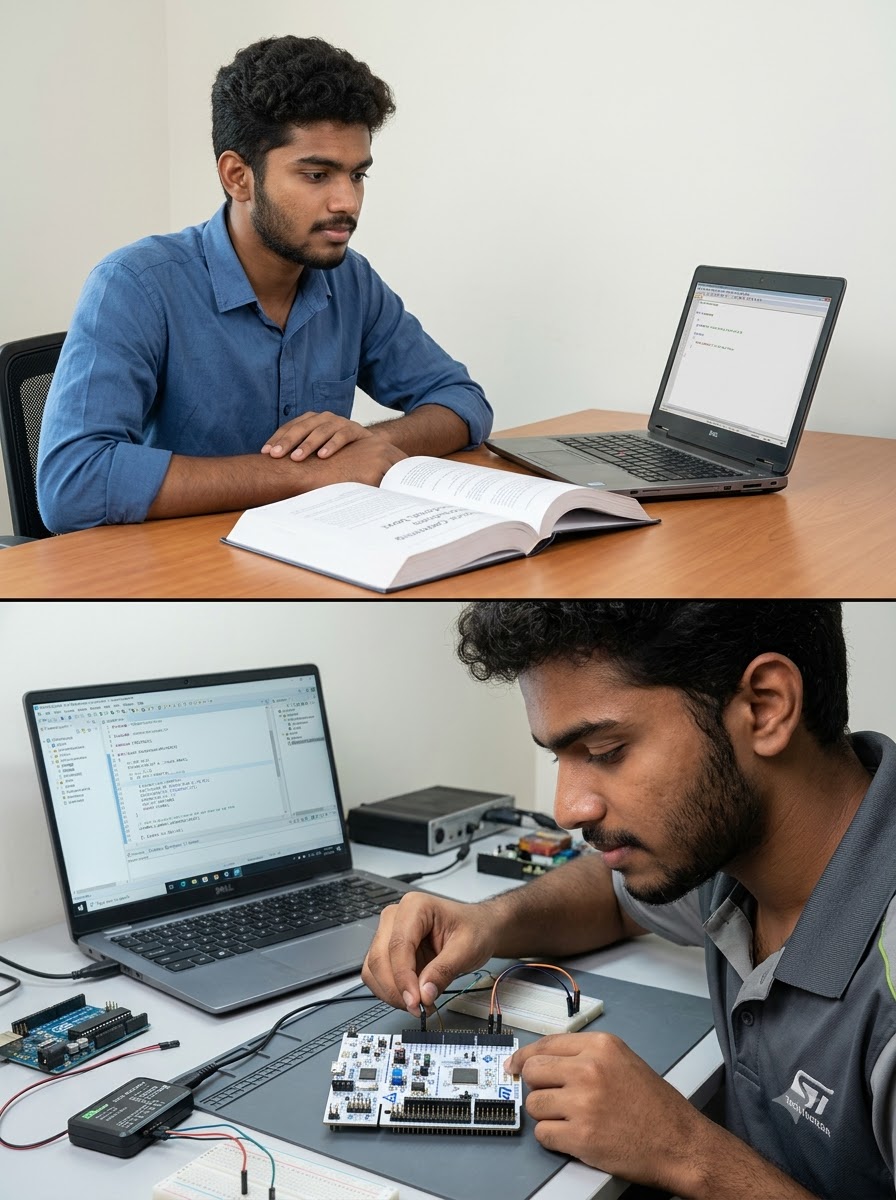
Understand C fundamentals but limited experience with low-level embedded programming and hardware.
Limited exposure to microcontrollers, peripherals, sensors, communication buses, and hardware drivers.
Little practical exposure to RTOS, Embedded Linux, industrial protocols, debugging, OTA, and secure deployment.
Develop microcontroller firmware using Embedded C, ARM Cortex-M, STM32, peripherals, interrupts, and hardware drivers.
Build real-time applications with FreeRTOS and develop Embedded Linux drivers, U-Boot configurations, and device-tree integrations.
Work with CAN, LIN, Modbus, RS485, bootloaders, OTA updates, secure boot, JTAG, GDB, CI/CD, and production firmware workflows.
Master Embedded C, RTOS, Embedded Linux, hardware drivers, industrial communication, debugging, security, and firmware deployment through hands-on engineering projects.
Build real embedded systems using Embedded C, ARM Cortex-M, STM32, FreeRTOS, Embedded Linux, hardware drivers, industrial communication protocols, debugging tools, bootloaders, OTA updates, and secure firmware workflows. Every project is designed to demonstrate practical engineering skills and strengthen your embedded systems portfolio.
Description here.
Hear from learners who developed practical Embedded C, STM32, RTOS, Embedded Linux, firmware, and industrial communication skills through hands-on engineering projects.
The Embedded Systems program helped me move beyond basic C programming and understand how real firmware is developed. Working with STM32, peripherals, RTOS concepts, debugging, and communication protocols gave me the confidence to build complete embedded projects.
Embedded Firmware Engineer
"I finally understood how C programming connects with registers, memory, interrupts, and real microcontroller peripherals. The STM32 projects made the concepts practical."
Embedded Software Engineer
"The FreeRTOS project helped me understand tasks, priorities, queues, mutexes, and real-time scheduling instead of just learning the concepts theoretically."
Firmware Developer
"Working with kernel modules, device trees, cross-compilation, and sensor drivers gave me a much clearer understanding of embedded Linux development."
Embedded Linux Developer
"The firmware architecture modules changed the way I approach embedded projects. Driver abstraction, state machines, debugging, and fault handling became part of my development workflow."
Firmware Engineer
"Before the course I knew C but had very little microcontroller experience. Building STM32 applications with real peripherals helped bridge that gap."
Embedded Systems Developer
"The combination of Embedded C, STM32, RTOS, debugging, communication protocols, and portfolio projects gave me a much stronger foundation for embedded systems interviews."
Junior Firmware Engineer
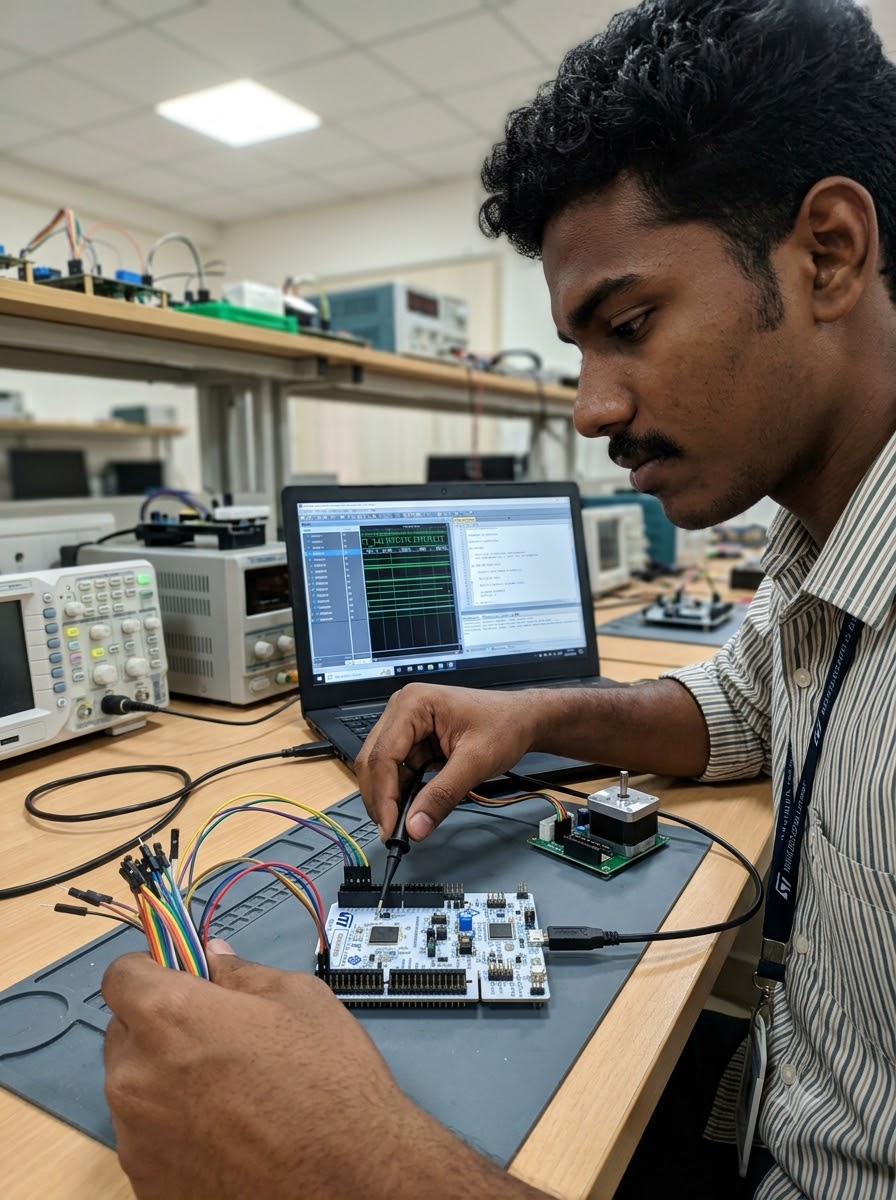
Seamlessly blend online theoretical depth with offline real-world practicals. Build and program embedded systems with hands-on exposure to microcontrollers, sensor interfacing, live firmware projects, and internship opportunities.
Live sessions paired with in-lab embedded system practicals.
Work with microcontrollers, sensors, and live firmware projects.
Apply your skills with real embedded systems engineering teams.
Flexible learning paths tailored to your career milestones. Select the track that fits your background.
Total INR 59,999* (Inclusive of taxes)
*Estimates based on market placement reports. Individual outcomes may vary.
Your certification formally validates your skill set in recruiter searches.
Unique cryptographic hashes registered on global validation boards.
Add directly to your credentials panel with pre-filled ID tracking.
Your name will be printed exactly like this on your official Pantech certificate.
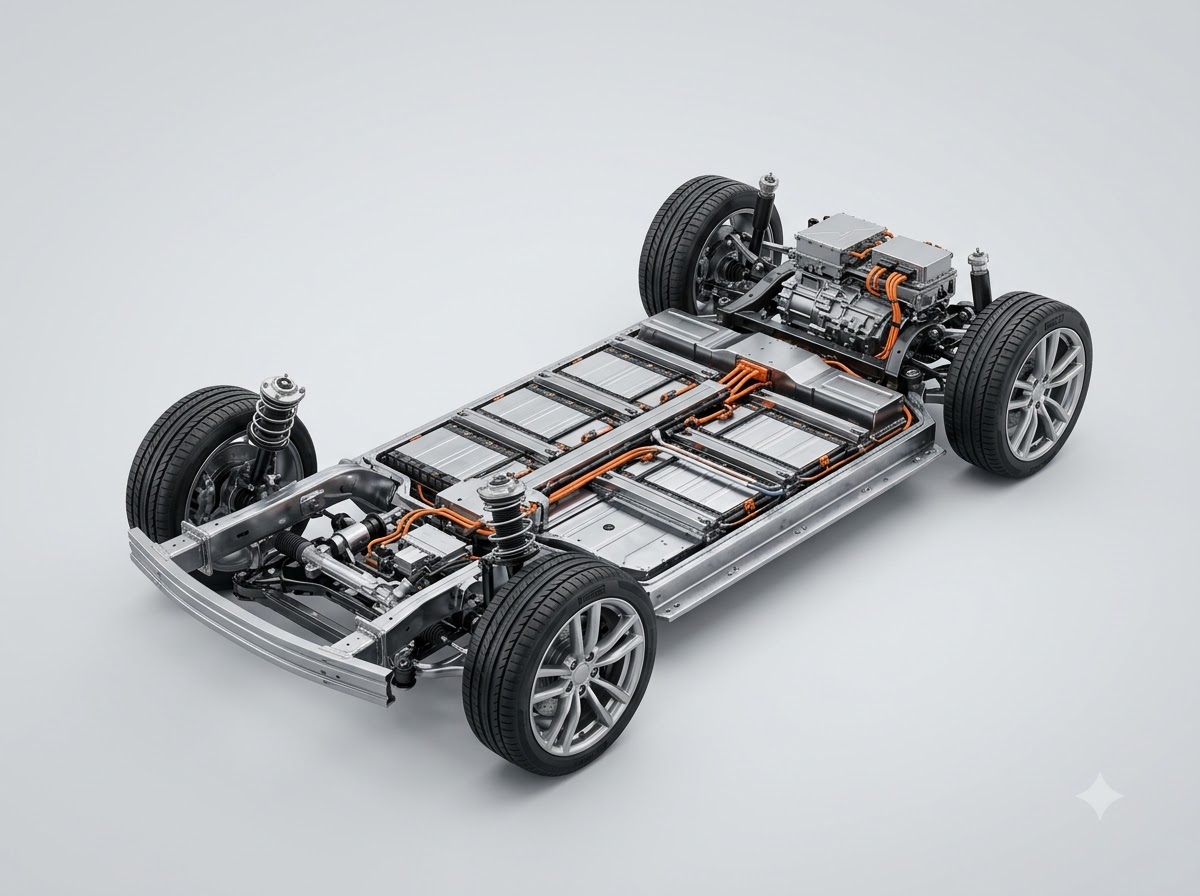 Track 01 • Electric Vehicles
Learn EV powertrain design, battery management systems, motor control, and charging infrastructure fundamentals.
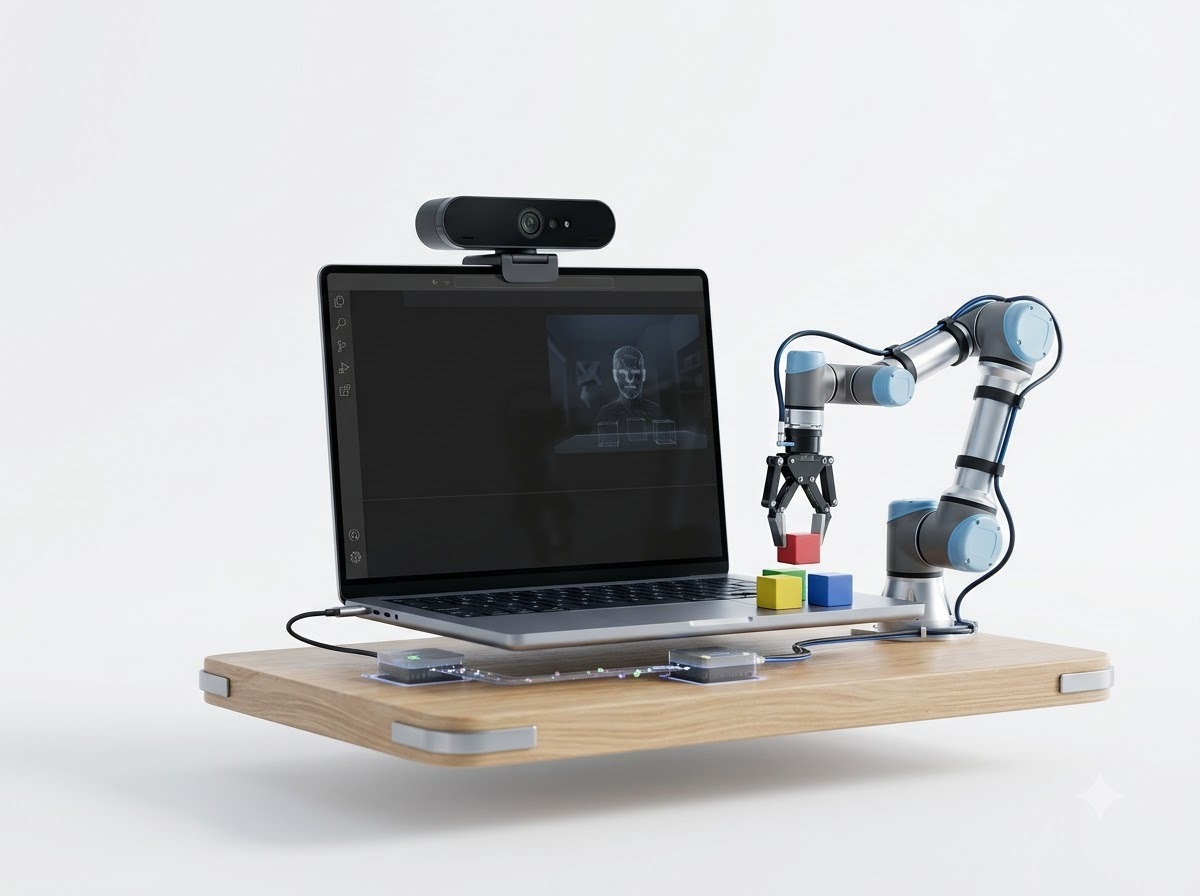 Track 02 • Computer Vision
Develop image processing pipelines, object detection models, and intelligent perception systems using deep learning frameworks.
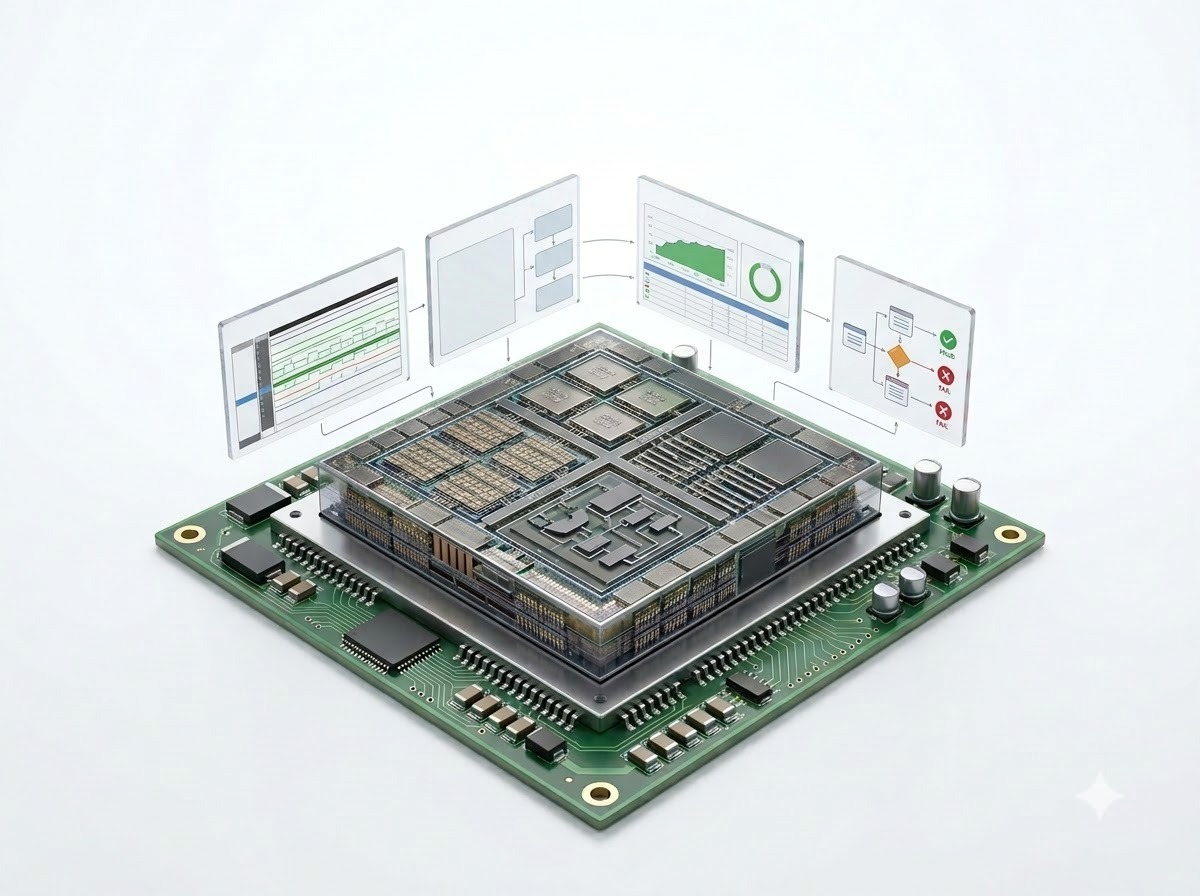 Track 03 • ASIC RTL
Master chip-level RTL design, synthesis, and verification methodologies used in real-world ASIC development flows.
Embedded engineers build the firmware, controllers, drivers, and real-time systems behind modern products. Explore the industries where embedded systems expertise creates real-world engineering impact.
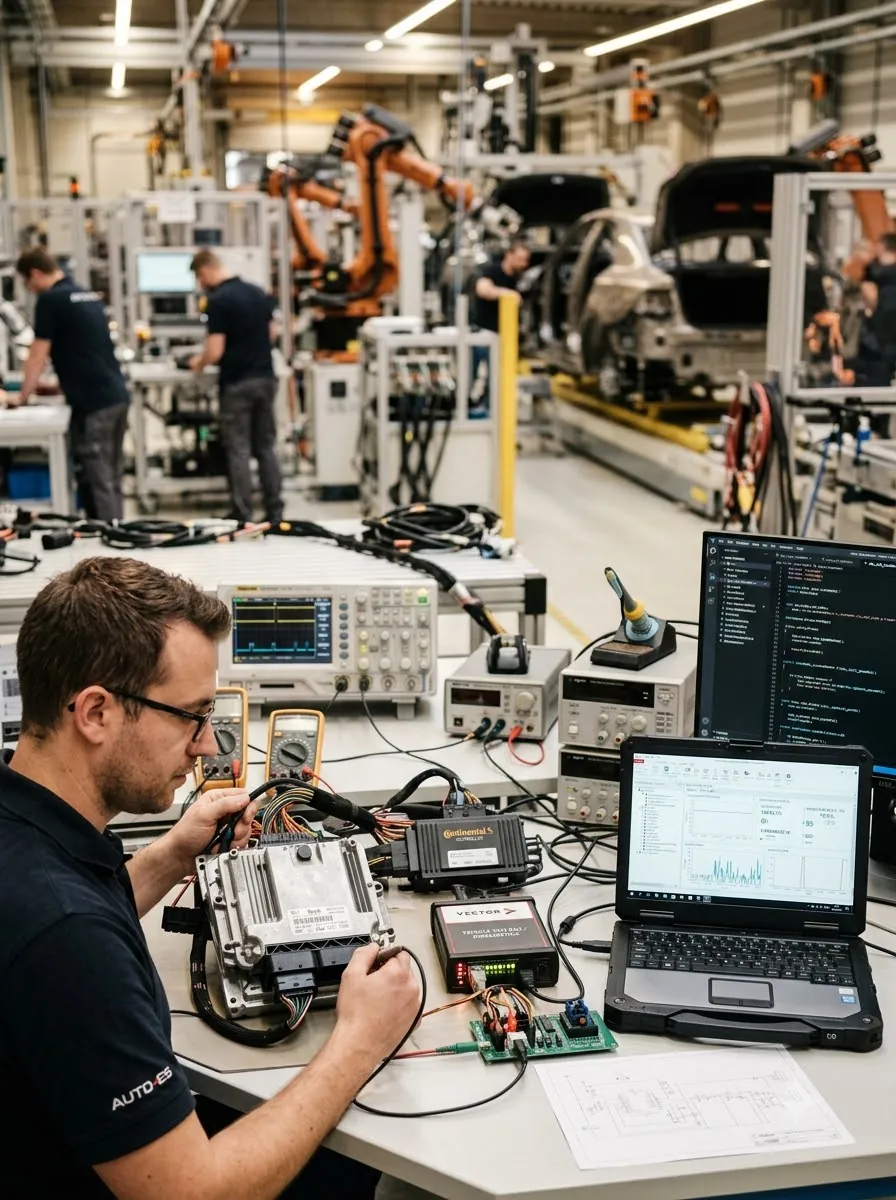
Hover to explore →
Build vehicle ECUs, controllers, CAN interfaces, diagnostics, and real-time firmware.
Connected Vehicles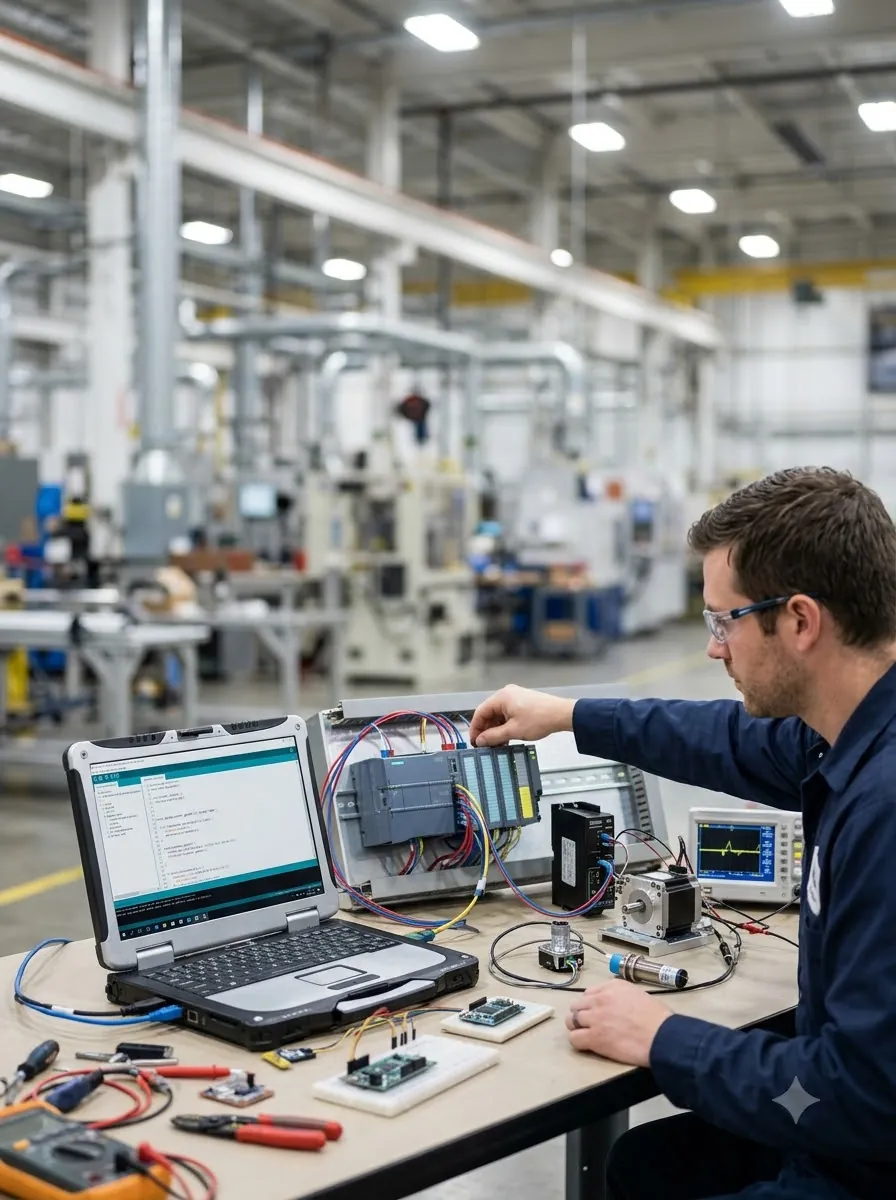
Hover to explore →
Develop real-time controllers, motor control, sensors, PLC interfaces, and automation firmware.
Smart Manufacturing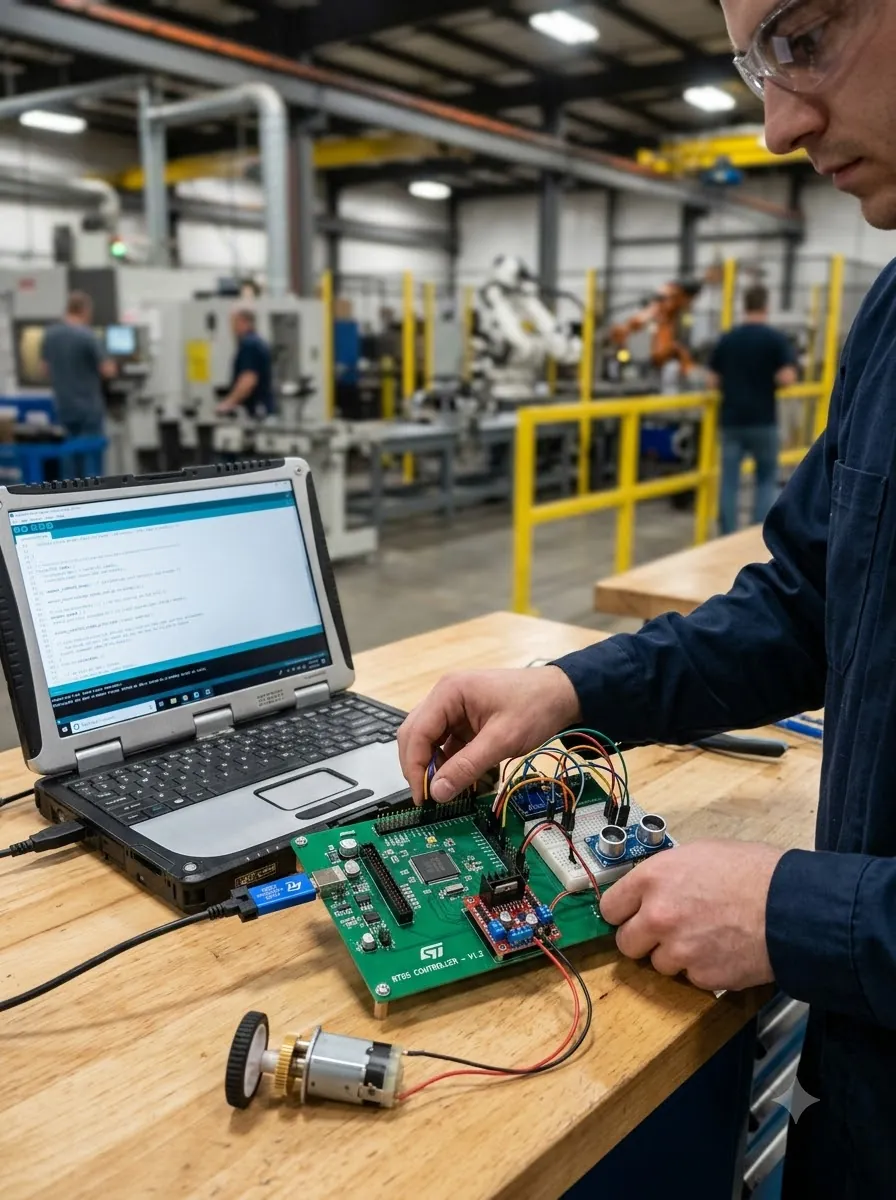
Hover to explore →
Build robotic controllers with RTOS, motor drivers, sensors, actuators, and embedded software.
Intelligent Machines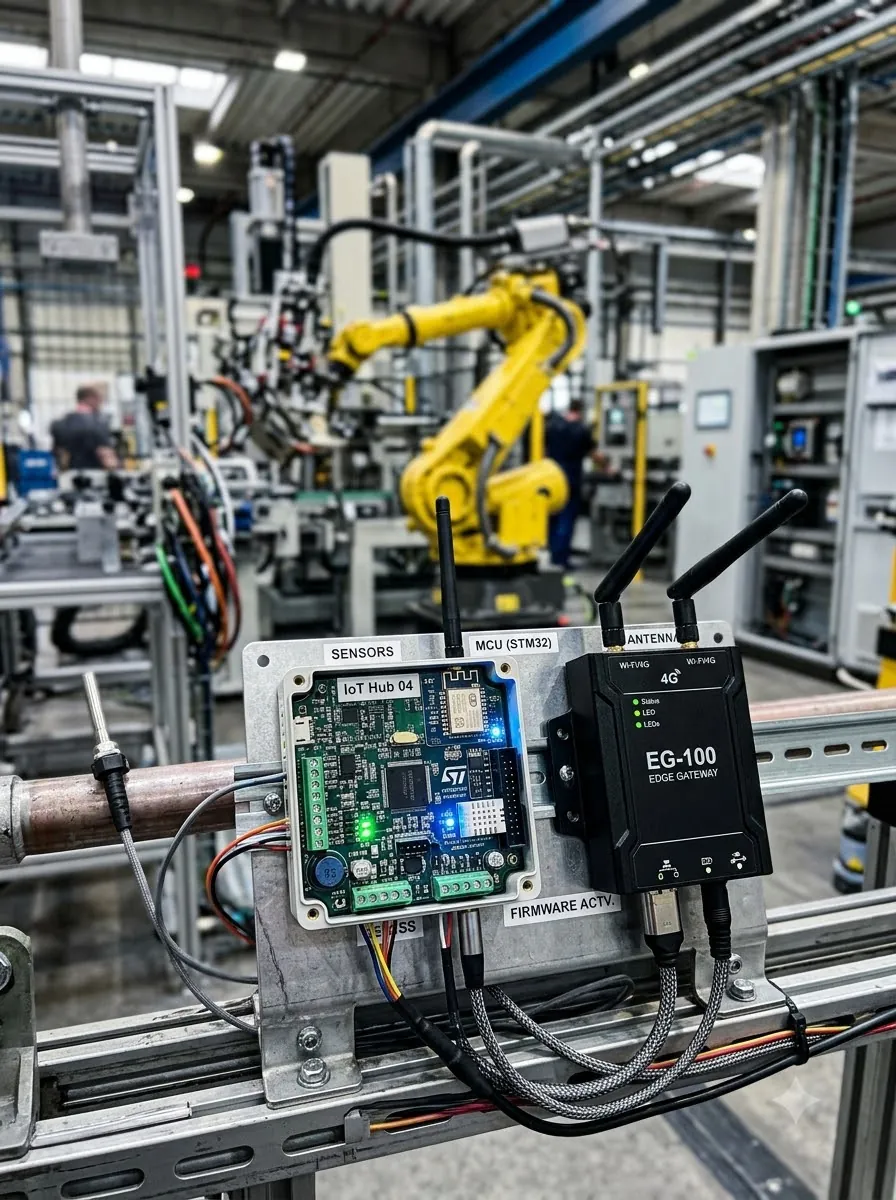
Hover to explore →
Create connected products with microcontrollers, wireless interfaces, sensors, and low-power firmware.
Connected DevicesEverything you need to know about the Embedded Systems Engineering program, learning path, tools, projects, and career opportunities.
The program is designed for Electronics, Electrical, Computer Science, Instrumentation, Mechatronics, Automotive, and related engineering students, graduates, and working professionals who want practical experience in Embedded C, microcontrollers, firmware development, RTOS, Embedded Linux, hardware interfacing, and industrial communication.
Basic programming knowledge and familiarity with electronics or engineering fundamentals are helpful, but advanced embedded experience is not required. The program starts with Embedded C fundamentals and progressively moves into microcontrollers, RTOS, Linux, drivers, communication protocols, and production firmware.
The primary language is Embedded C, with supporting exposure to C++ and Embedded Python where relevant. The focus is on writing efficient firmware, working with memory and registers, bit manipulation, peripheral drivers, interrupts, and hardware interfaces.
The curriculum focuses on ARM Cortex-M architecture and STM32 microcontrollers. You will work with GPIO, timers, PWM, interrupts, UART, SPI, I2C, ADC, watchdogs, memory maps, peripheral registers, and hardware abstraction concepts.
Yes. The program covers real-time operating system concepts including tasks, priorities, scheduling, context switching, queues, semaphores, mutexes, event groups, watchdogs, and real-time performance. FreeRTOS and related embedded RTOS concepts are included in the advanced learning path.
Yes. The Embedded Linux track introduces Linux fundamentals, processes and memory, shell utilities, kernel modules, character drivers, device-tree concepts, U-Boot, board bring-up, cross-compilation, and Buildroot.
You will work with common embedded communication interfaces including UART, SPI, I2C, CAN, LIN, RS485, and Modbus. The curriculum focuses on both protocol fundamentals and practical firmware integration.
Yes. The learning path includes practical projects covering STM32 firmware, peripheral drivers, RTOS-based controllers, motor control, sensor integration, Embedded Linux drivers, industrial communication, and production-oriented firmware. The final capstone combines multiple embedded engineering concepts into a complete system.
The complete curriculum is structured across a 16-week learning roadmap. The first four weeks focus on Embedded C and microcontroller fundamentals, followed by RTOS and hardware integration, Embedded Linux and drivers, and finally production firmware and industrial communication.
Yes. The program introduces practical debugging and validation techniques using JTAG, GDB, logic analyzers, oscilloscopes, firmware diagnostics, fault handling, watchdog mechanisms, and systematic hardware-software debugging workflows.
Yes. The advanced curriculum introduces production firmware architecture, bootloaders, OTA firmware updates, secure boot, firmware integrity, modular design, driver abstraction, state machines, and deployment-oriented development practices.
The curriculum prepares learners for roles such as Embedded Software Engineer, Firmware Engineer, Embedded Systems Engineer, Device Driver Developer, RTOS Developer, Embedded Linux Engineer, BSP Engineer, IoT Firmware Engineer, Automotive Embedded Engineer, and Embedded Test & Validation Engineer.
The technology stack includes C, C++, ARM Cortex-M, STM32, FreeRTOS, CMSIS, STM32 HAL, Embedded Linux, Buildroot, U-Boot, Device Tree, CAN, Modbus, RS485, GDB, JTAG, Docker, and Git-based development workflows.
You will have multiple embedded engineering projects demonstrating firmware development, peripheral programming, RTOS implementation, communication protocols, driver development, Embedded Linux, debugging, and system integration. These projects can be documented as technical case studies for your engineering portfolio.
Upon successful completion of the program, learners can receive a Certificate of Completion along with their project documentation and portfolio deliverables, subject to the program's applicable completion requirements.
Transform your skills into industry-ready Embedded Systems Engineering expertise. Learn Microcontrollers, RTOS, C/C++ Firmware, Sensor Interfacing, PCB Design, ARM/STM32, Communication Protocols, and IoT Integration through hands-on industry projects.